📜 RL-2026 · Geometrisches Paradigma
600 years. No answer. Until now.
THE FONTANA-LÜTH METHOD · GEOMETRIC GLYPH ANALYSIS · CAPPELLI LEXICON · JUNE 2026
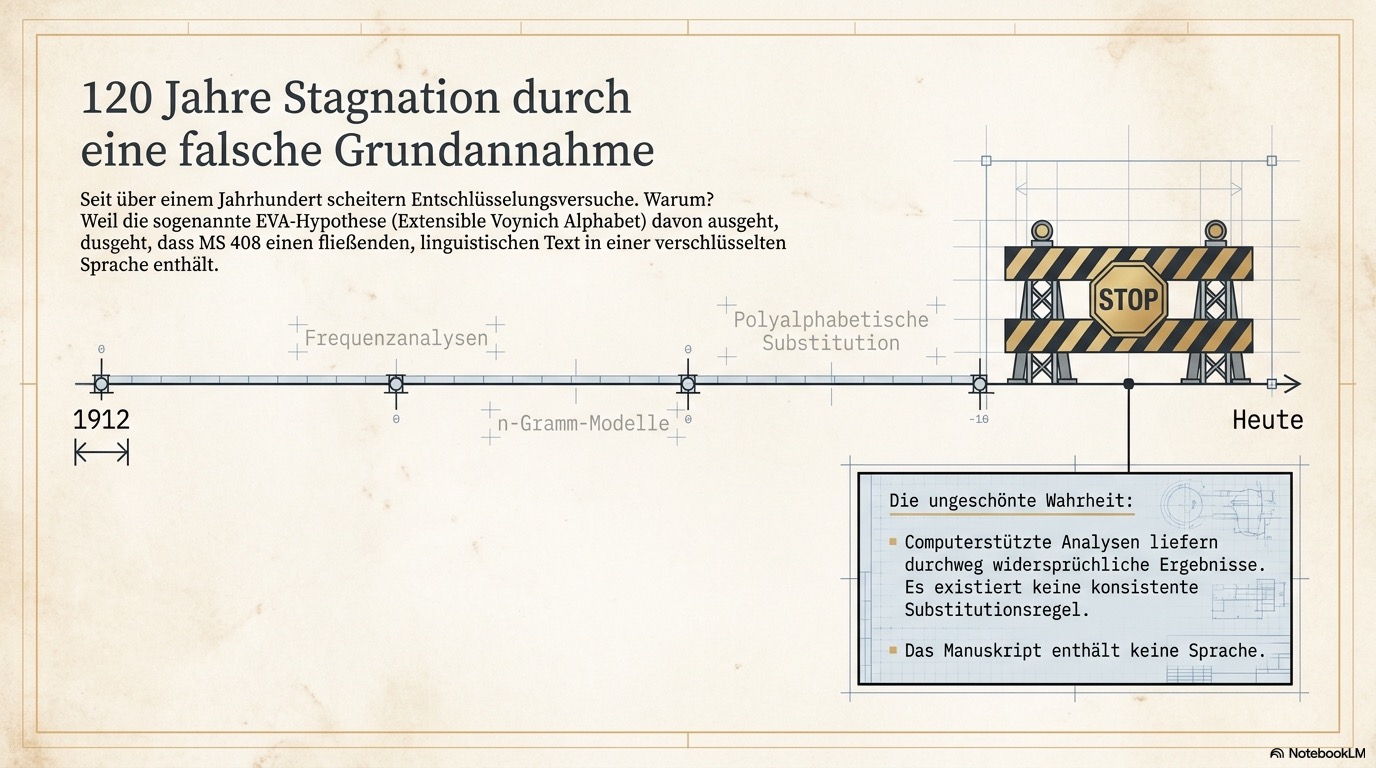
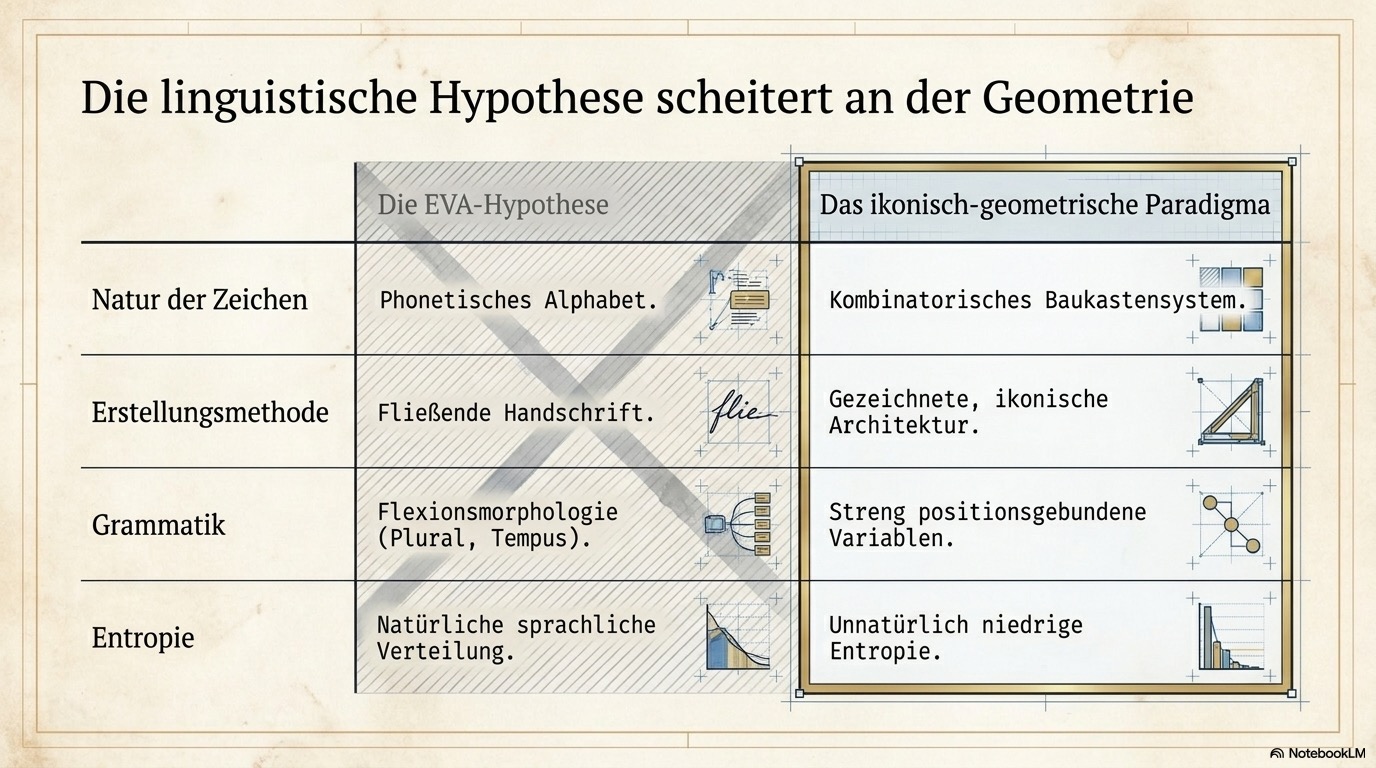
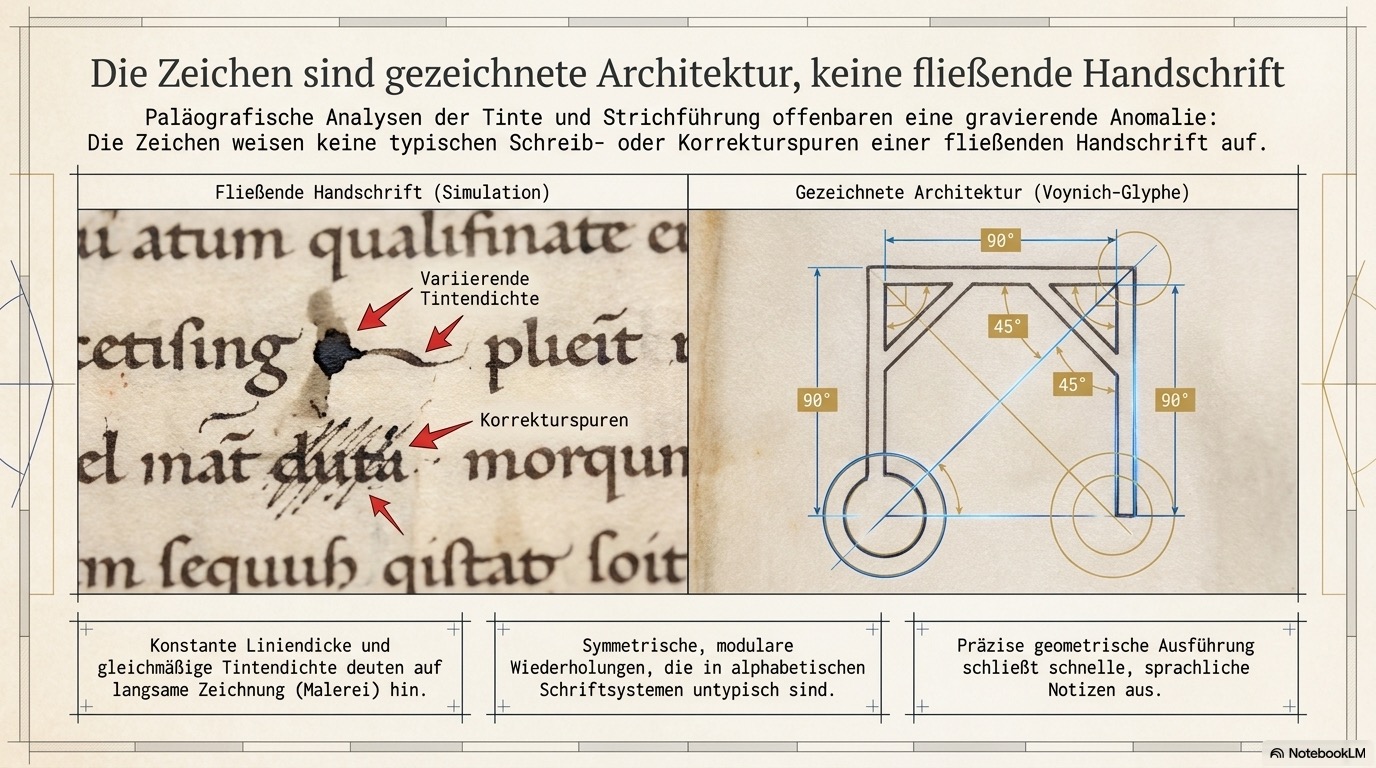
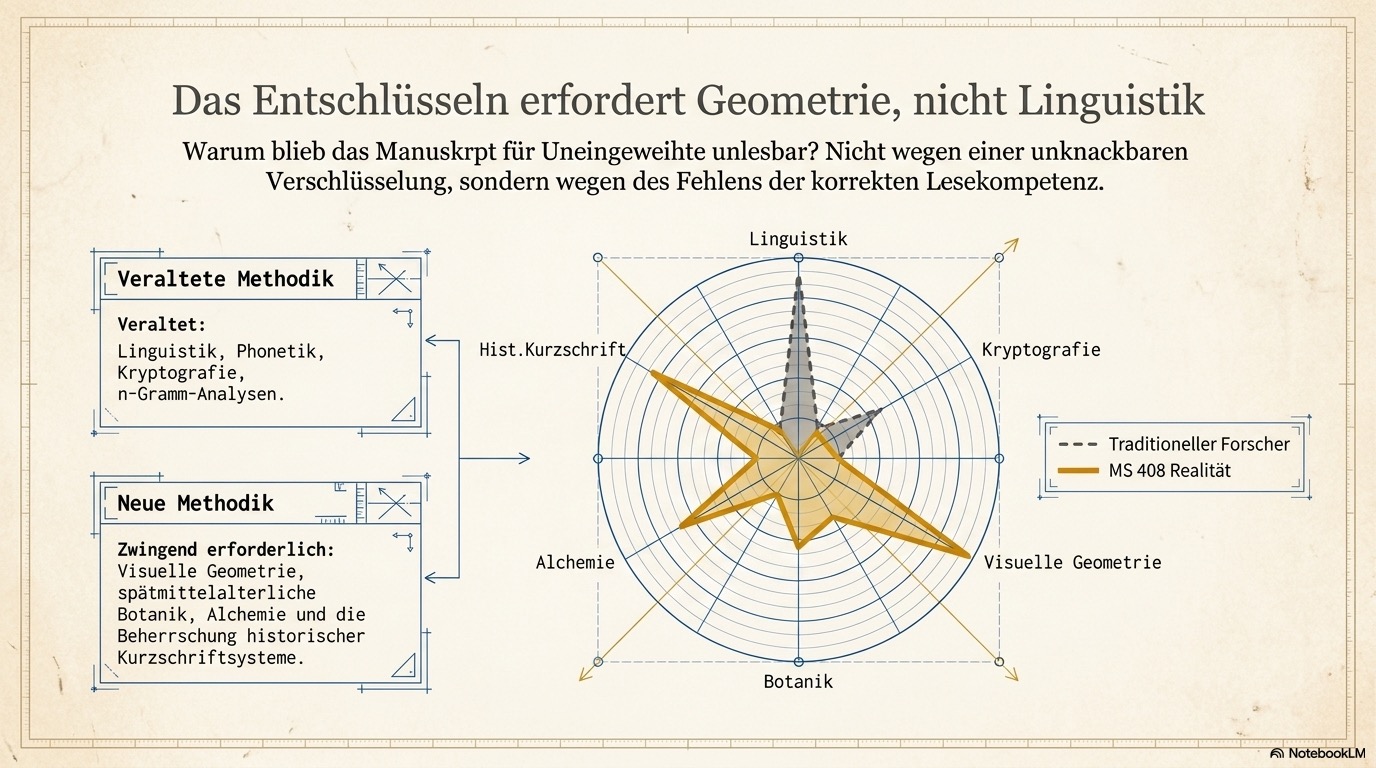
For more than 600 years, every attempt to read the Voynich Manuscript (MS 408, Beinecke Rare Book & Manuscript Library, Yale University) has started from the same assumption: that its glyphs spell out a language — natural, artificial, or encrypted. Every one of these attempts has failed.
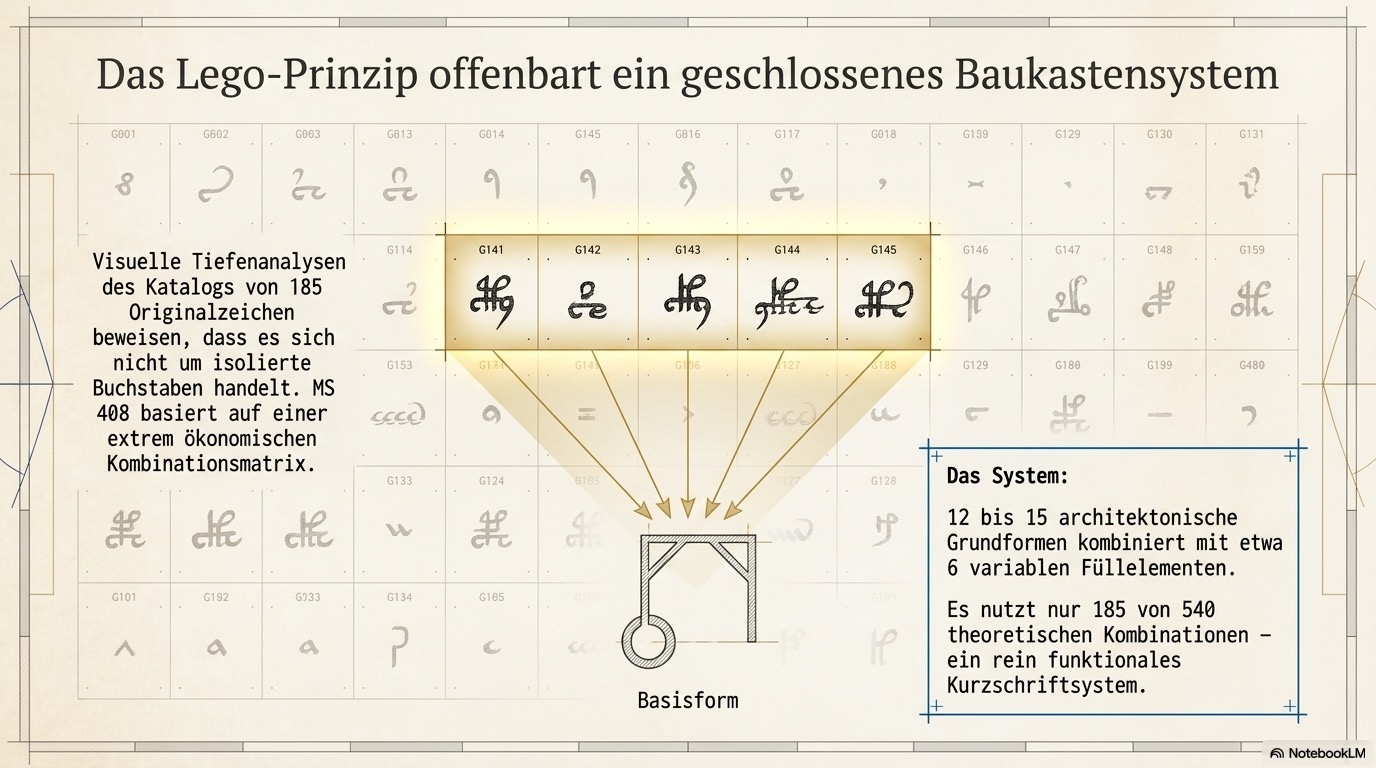
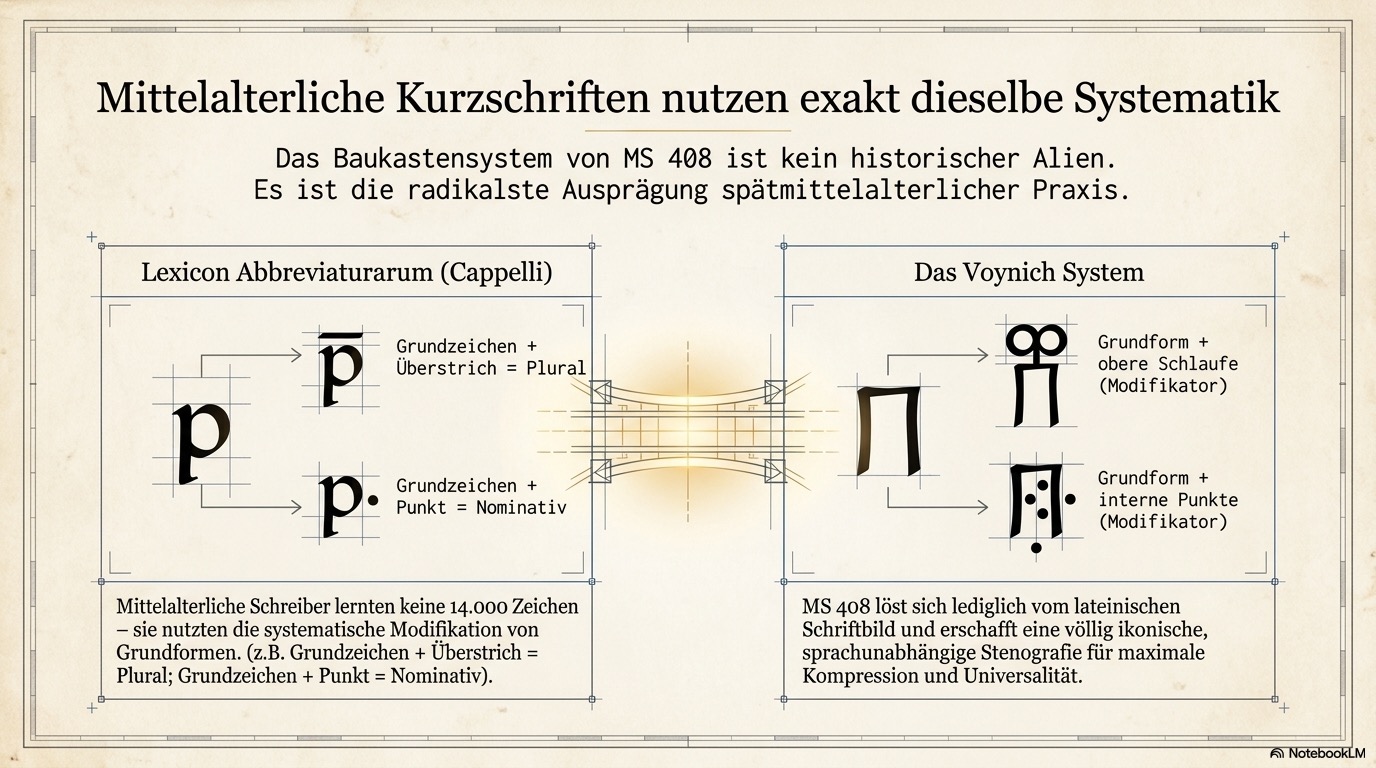
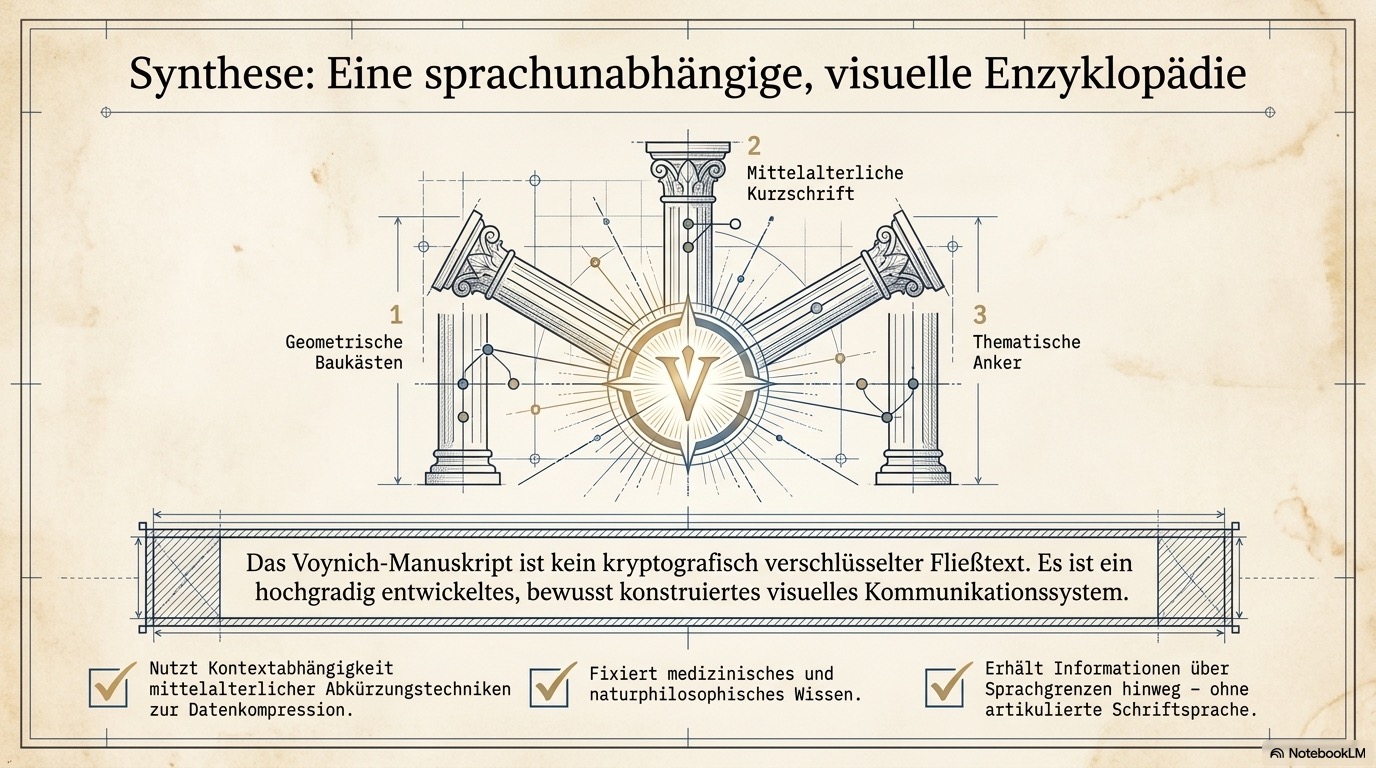
The VRP-3.0 hypothesis proposes that the assumption itself is the error. MS 408 is read here not as flowing text, but as a closed combinatorial building-block system: a visual notation in which each glyph is assembled from a small set of reusable parts, the way medieval shorthand assembled thousands of abbreviations from a few base strokes.
The Anatomy of a Glyph
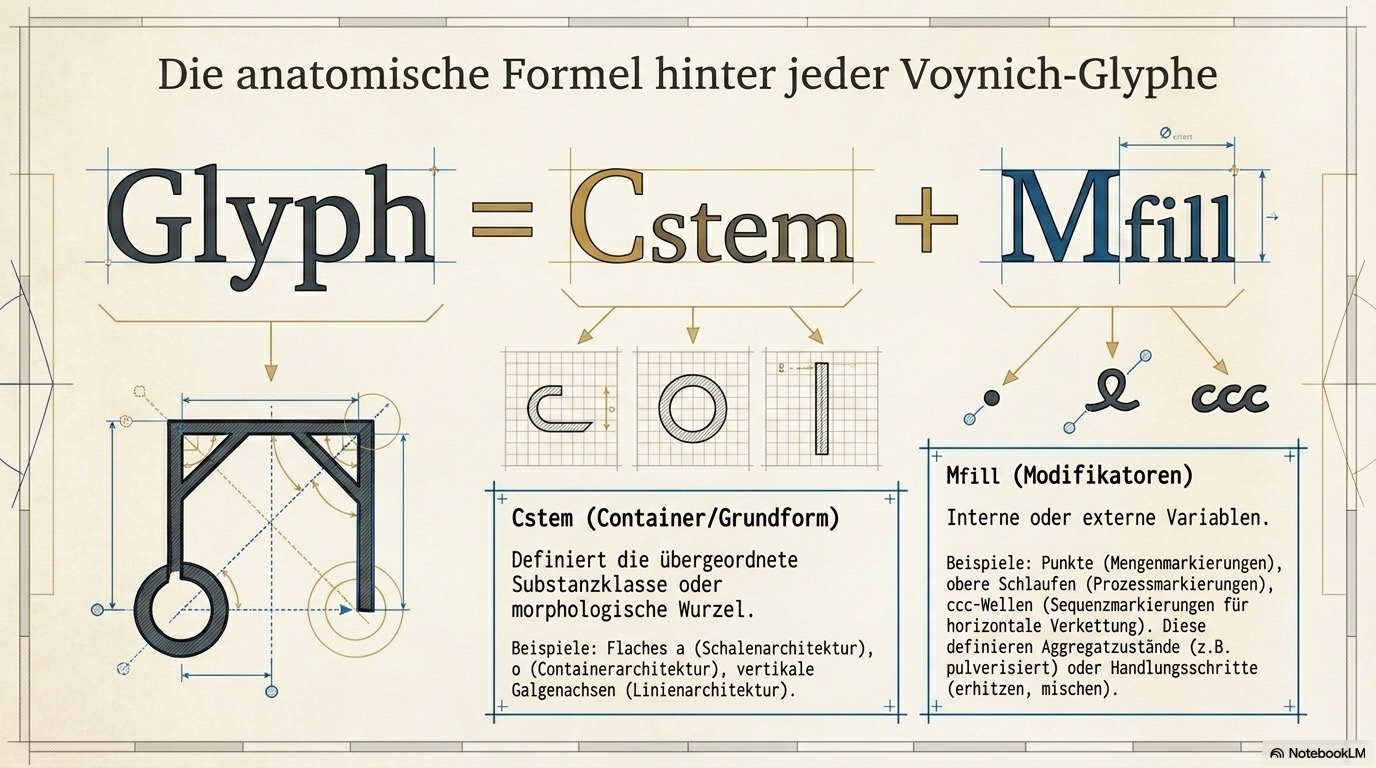
Under this hypothesis, every glyph decomposes into two functional layers:
The Container — the geometric base form. It carries the superordinate class of meaning: the substance, object, or root concept. Examples of container architectures include the open shell ("a"-type), the closed vessel ("o"-type), the vertical gallows axes, and the horizontal wave chains.
The Fill — internal or external modifiers attached to the container: dots, loop flags, chained c-waves, diacritic strokes. Under the hypothesis, fills assign the variables: quantity, state, process, sequence. The position of a fill (left, right, inside, above) determines its functional class — a principle documented in Tironian notes, where the placement of the auxiliary sign relative to the radix changes its value.
One glyph can therefore carry a complete instruction — substance, action, measure — the way a chemical formula carries a complete compound.
The Inventory: 185 Forms, Honestly Sourced
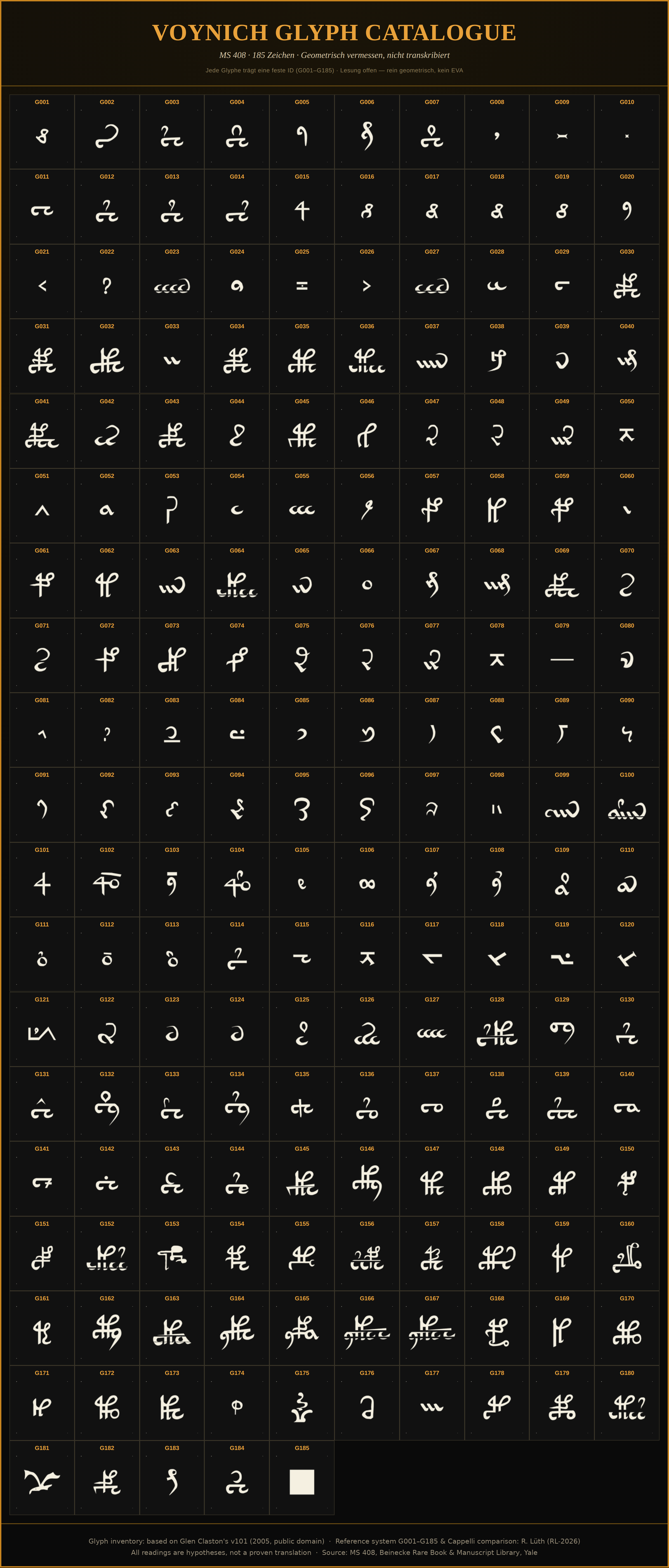
The working inventory of this research comprises 185 catalogued glyph forms. The form set is based on the v101 transliteration alphabet by Glen Claston (2005, public domain) — the most complete inventory ever compiled by a researcher who, like this project, refused to dissolve composite signs into smaller alphabetic units.
What this project adds on top of Claston's forms:
The Historical Anchors
This is not a system invented for MS 408. It is a system adapted from documented practice:
We invent nothing new. We adapt.
"MS 408 is not a language to be translated. It is a system to be understood: a modular, iconic shorthand — built from geometric containers and meaning-bearing fills, governed by thematic anchors."
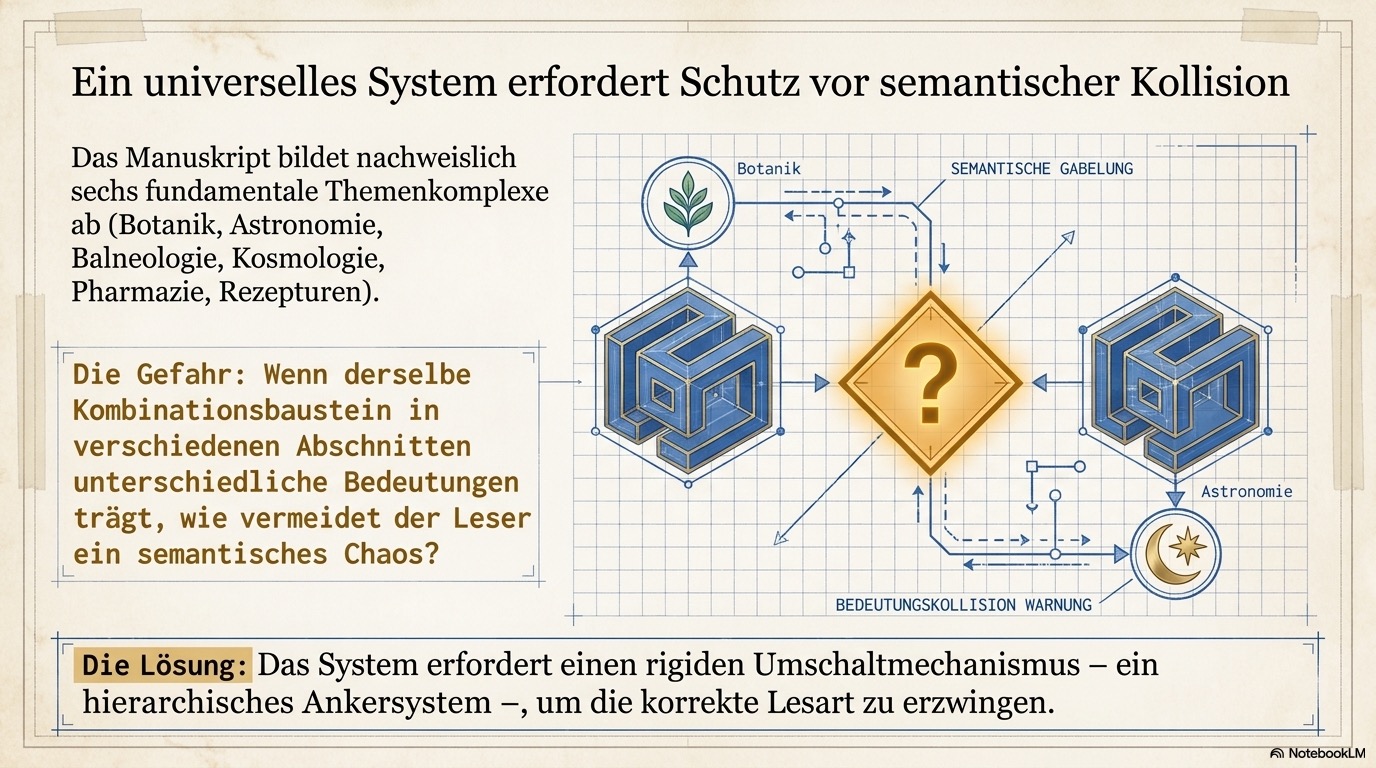
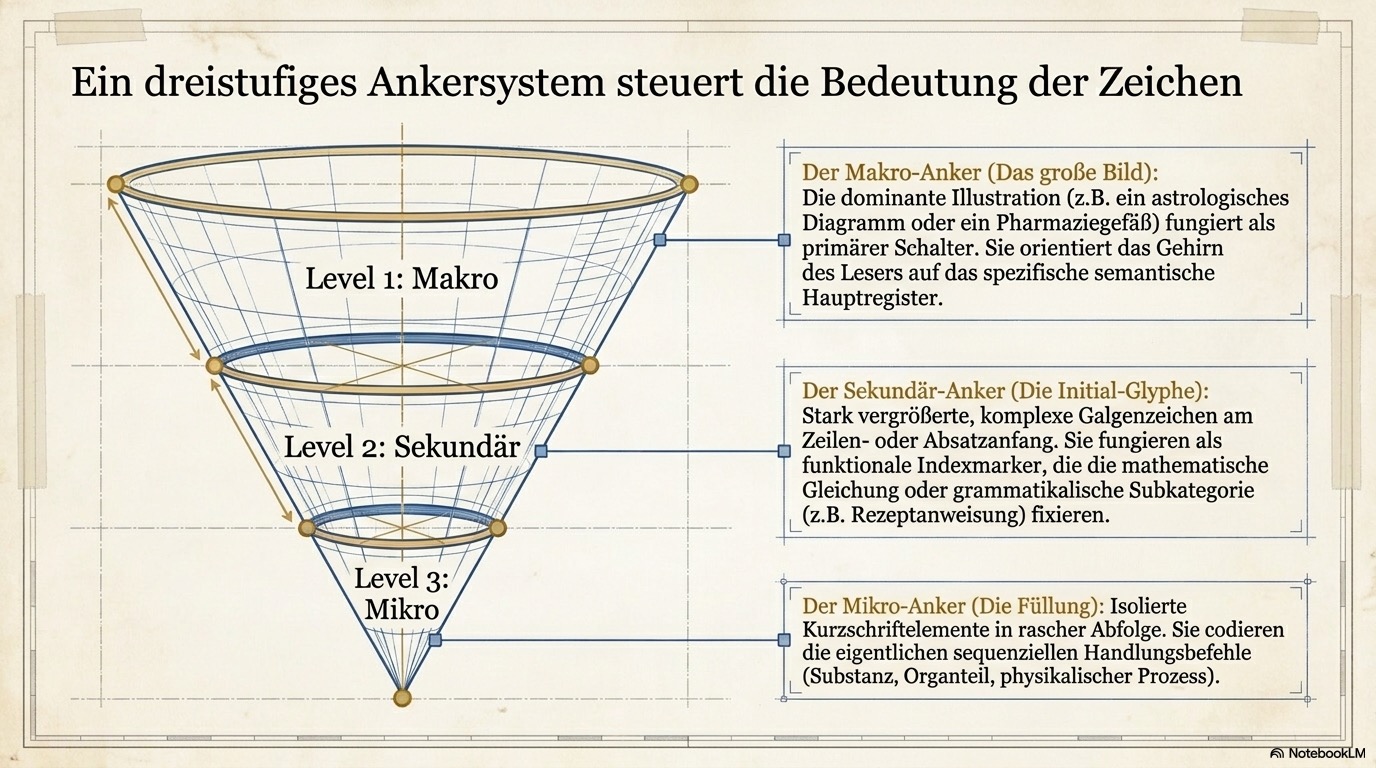
MS 408 demonstrably covers six thematic complexes: botany, astronomy, balneology, cosmology, pharmacy, and recipe lists. A compressed building-block system that serves all six needs a mechanism against semantic collision — the same glyph cannot silently mean "flower" and "star" at once. The hypothesis proposes a three-level anchor system:
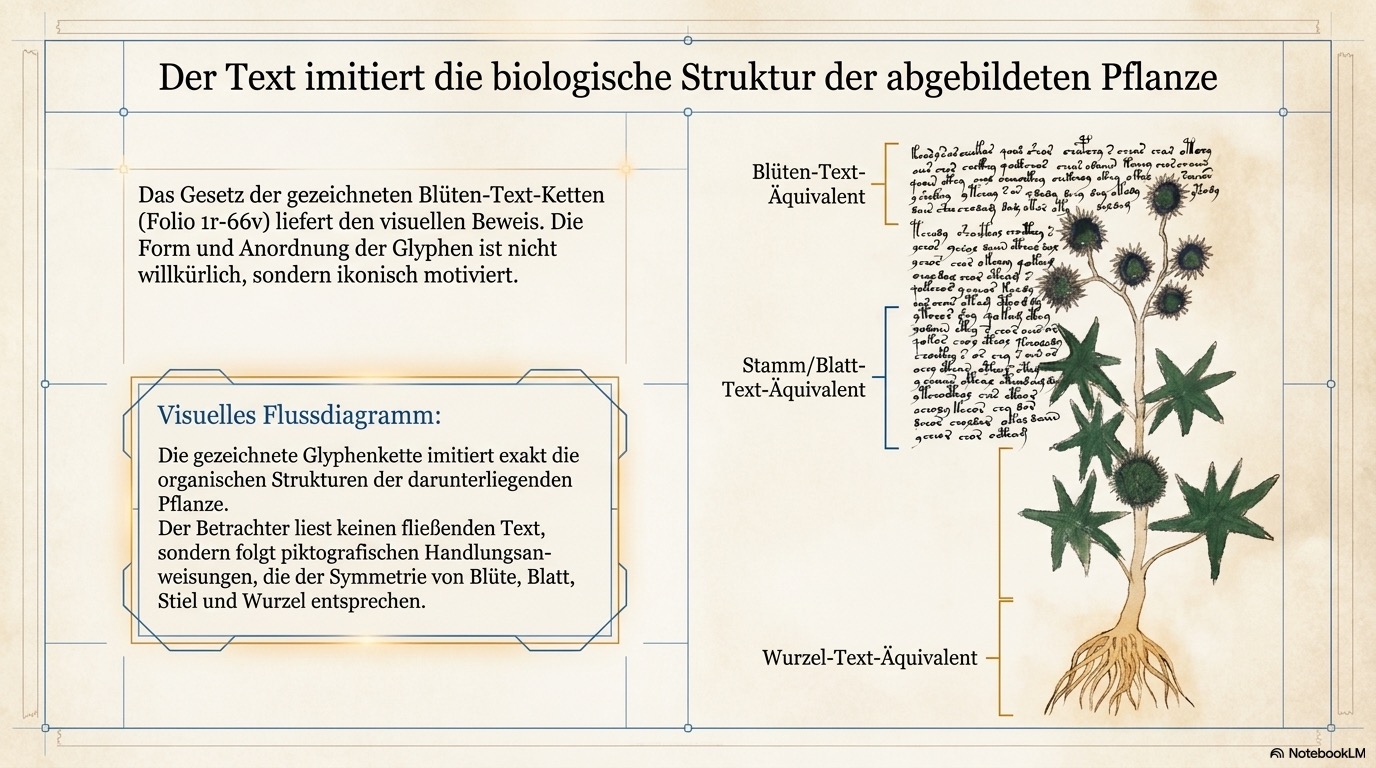
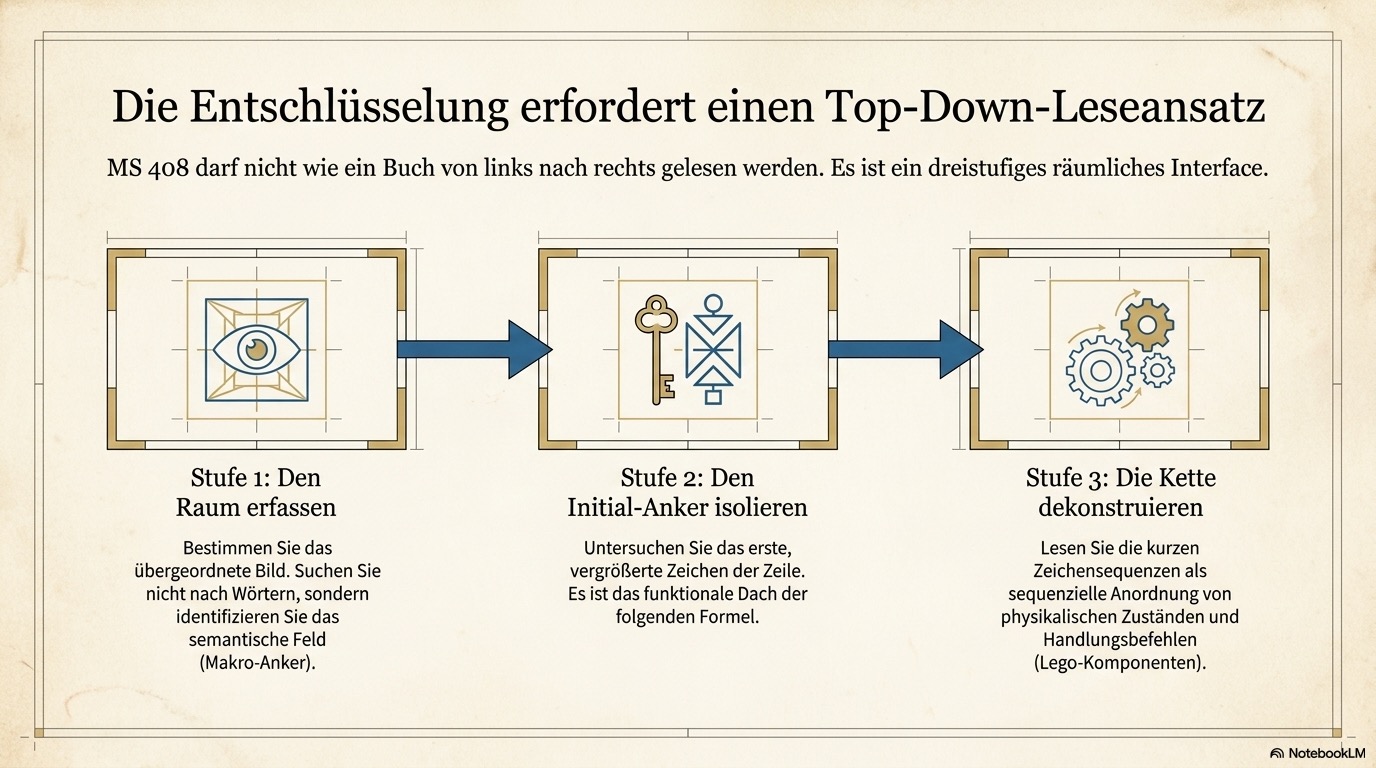
1. The Macro Anchor — the page image. The dominant illustration (plant, zodiac wheel, vessel) switches the semantic register for the whole page. On a botanical page, container "X" is read in the plant register; on an astronomical page, in the star register. This is the documented logic of determinatives in other notation systems.
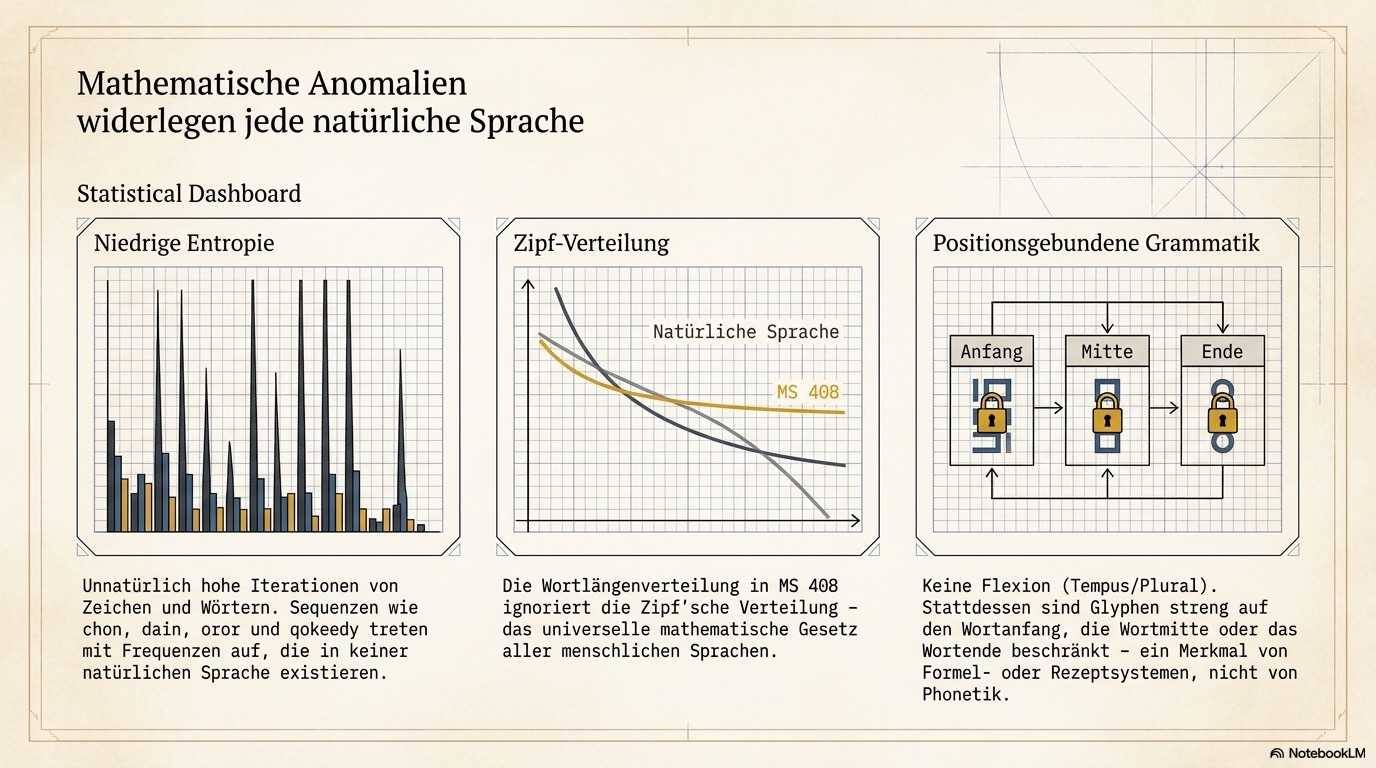
2. The Secondary Anchor — the initial glyph. The enlarged, complex gallows characters at paragraph and line beginnings act as functional index markers: they fix the subcategory (instruction vs. observation) and the action class for the sequence that follows. It is a documented distributional fact of MS 408 that these large characters cluster at paragraph openings — exactly where a switching sign would have to stand.
3. The Micro Anchor — the fill sequence. Within the line, isolated shorthand elements encode the sequential commands: [Substance] → [Part] → [Process].
Original pages from the Voynich Manuscript — botanical sections, astronomical diagrams, and the mysterious text that has defied decipherment for six centuries.


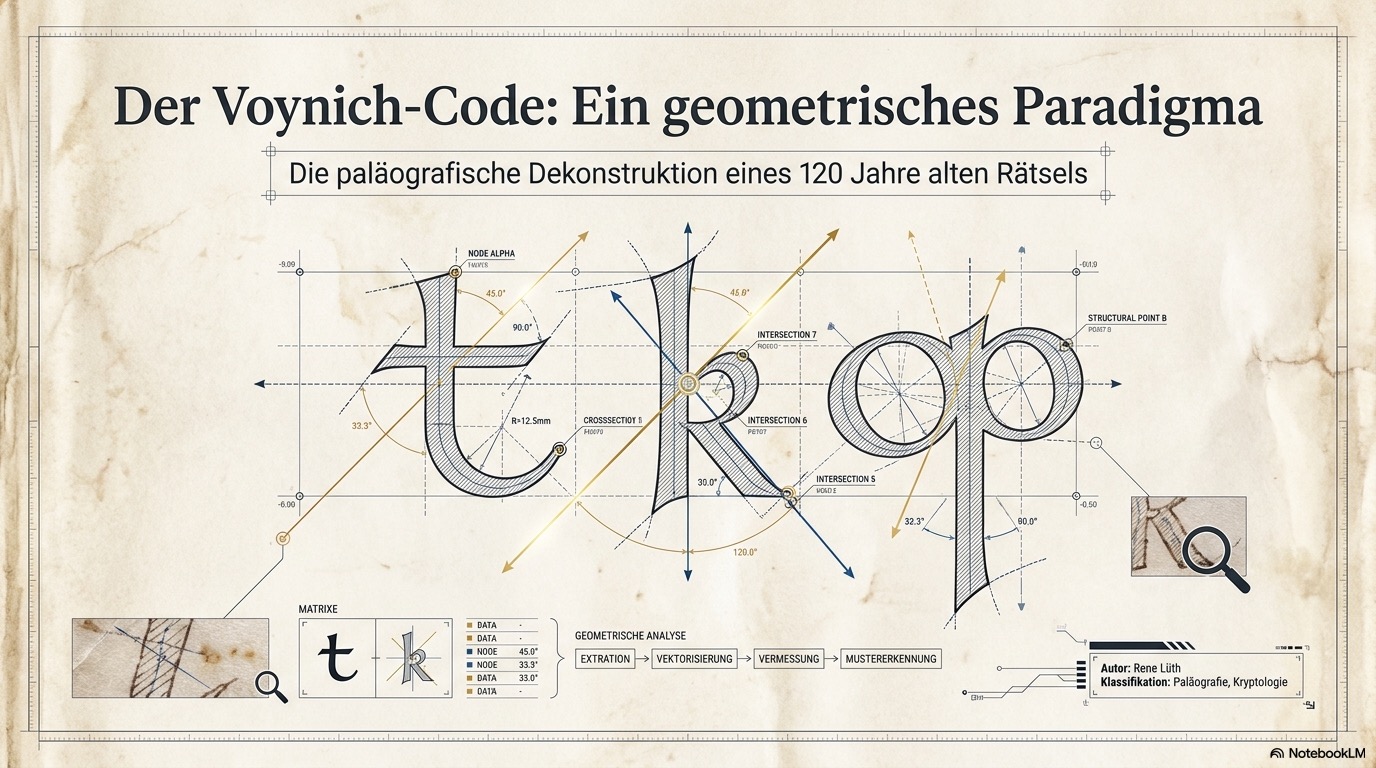
Each glyph in the Voynich Manuscript is a geometric indicator — not a letter, not a phoneme, but an angular measurement mapped to medieval Latin shorthand via the Fontana 16-sector disc.



| Glyph | Container | Fill | Reading |
|---|---|---|---|
| 1 | round vessel form | seed dots | "flower seeds" |
| 2 | line axis | heat marker | "apply heat" |
| 3 | shell form | mixing loop | "place in vessel" |
The astronomical folios contain circular diagrams with golden stars, human faces, and text arranged in concentric rings — possibly a volvelle system for astronomical or calendrical calculations.

RENÉ LÜTH · JUNE 2026 · PALEOGRAPHY, CRYPTOLOGY, MEDIEVAL WRITING SYSTEMS
The full hypothesis in one document: why the language assumption has failed, how the container-and-fill model works, the three-level anchor system, the three-stage reading method, and the falsifiable research programme — with full references from Cappelli to the Tironian corpus.
A hypothesis that cannot fail is worthless. This one can fail, and here is how:
Test 1 — Decomposition: All 185 catalogued forms must decompose into a small set of base containers plus a limited set of fills. If a substantial share of forms resists decomposition, the building-block model falls.
Test 2 — Section signature: If fills encode actions and measures, different manuscript sections (herbal, balneological, pharmaceutical, astronomical) must show measurably different fill distributions. If all sections show the same distribution, the semantic claim falls.
Test 3 — Anchor behaviour: If the large gallows glyphs are switching signs, they must cluster at paragraph openings AND the statistical fill distribution must change after them. If they behave like ordinary glyphs, the anchor model falls.
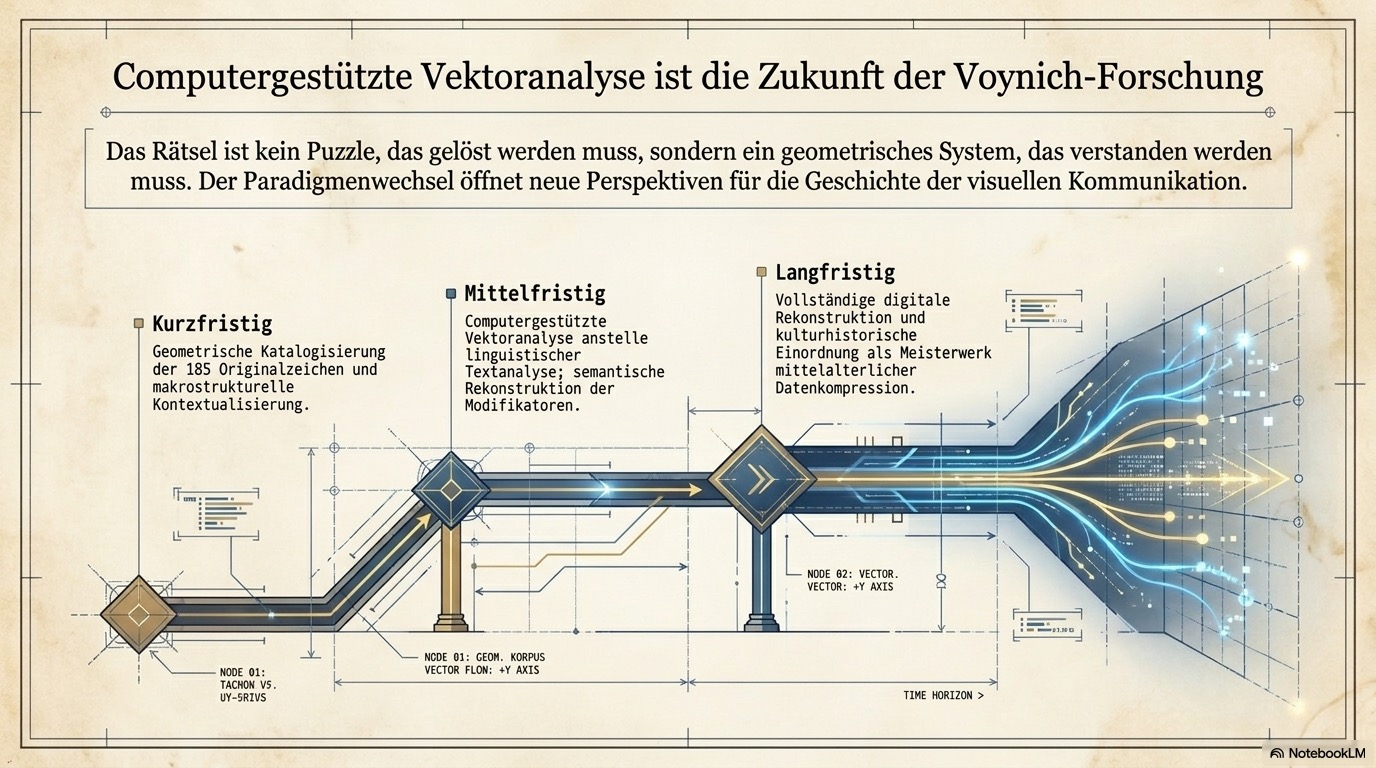
These tests are computable from the existing catalogue. They are the research programme of VRP-3.0 — published before the results, not after.
Results are preliminary. T3 blind test with independent experts is pending. All data and methodology are open for peer review and community analysis.
Real-time discussion · 13 research channels · Worldwide community